
Hairline Transplant

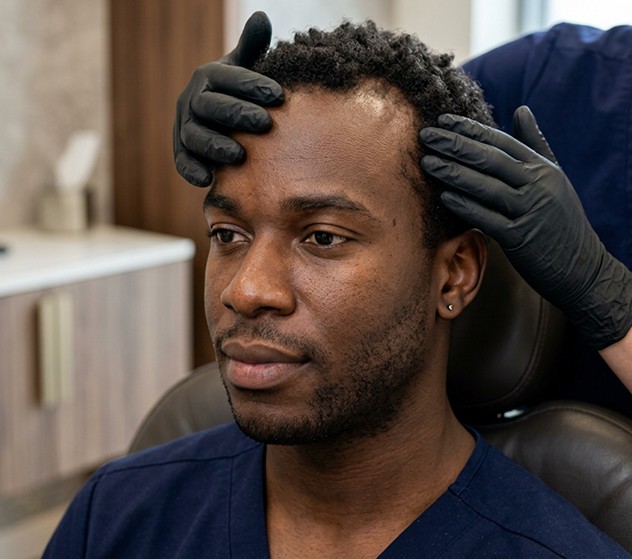
The frontal hairline is the most visible and defining feature of the scalp. A receding or softened hairline changes facial proportions, affects how age is perceived, and is often the first area where patients become aware of hair loss. A FUE hairline transplant at Hair Transplant Centre Toronto restores the frontal hairline permanently by relocating individual hair follicles from the donor zone to the areas where density has declined, producing a result that is natural-looking, long-lasting, and fully integrated with your existing hair.
Hairline design is one of the most consequential aspects of hair transplant surgery. A hairline placed too low, too straight, or too symmetrical will look artificial, regardless of how well the grafts survive. Dr. Kristy Bailey, a double-board-certified dermatologist and the #1-rated dermatologist among 233 practitioners in Toronto on RateMDs, approaches every hairline design with careful attention to facial proportions, forehead shape, age-appropriateness, and the natural irregularities that make hairlines look real. Every hairline transplant procedure is performed personally by Dr. Bailey at our King Street West clinic in downtown Toronto.
Patients travel to our Toronto clinic from across the Greater Toronto Area, including Mississauga, Markham, North York, Scarborough, and Vaughan, for hairline restoration that prioritizes a natural result over a dramatic one.

Personalized Care

Seamless Experience

Trusted Expertise
The frontal hairline is the most visible and defining feature of the scalp. A receding or softened hairline changes facial proportions, affects how age is perceived, and is often the first area where patients become aware of hair loss. A FUE hairline transplant at Hair Transplant Centre Toronto restores the frontal hairline permanently by relocating individual hair follicles from the donor zone to the areas where density has declined, producing a result that is natural-looking, long-lasting, and fully integrated with your existing hair.
Hairline design is one of the most consequential aspects of hair transplant surgery. A hairline placed too low, too straight, or too symmetrical will look artificial, regardless of how well the grafts survive. Dr. Kristy Bailey, a double-board-certified dermatologist and the #1-rated dermatologist among 233 practitioners in Toronto on RateMDs, approaches every hairline design with careful attention to facial proportions, forehead shape, age-appropriateness, and the natural irregularities that make hairlines look real. Every hairline transplant procedure is performed personally by Dr. Bailey at our King Street West clinic in downtown Toronto.
Patients travel to our Toronto clinic from across the Greater Toronto Area, including Mississauga, Markham, North York, Scarborough, and Vaughan, for hairline restoration that prioritizes a natural result over a dramatic one.


Benefits of a FUE Hairline Transplant
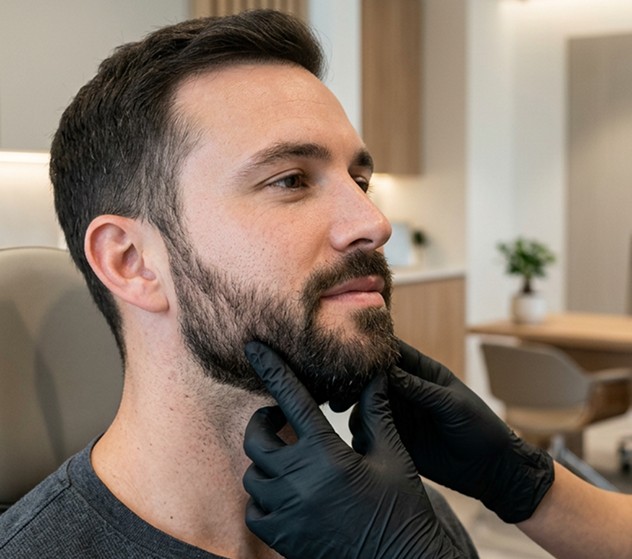
Hairline recession is one of the earliest and most visible signs of androgenetic hair loss in men, and can also occur in women due to traction, hormonal change, or frontal fibrosing alopecia. An FUE hairline transplant specifically addresses the frontal zone, using individually placed grafts to rebuild a defined, natural-looking hairline that frames the face and restores proportion.


Best Candidates for a Hairline Transplant in Toronto
A hairline transplant produces the most stable and natural-looking results when candidacy is carefully assessed. Dr. Bailey evaluates each patient individually during a free consultation to determine whether surgery is appropriate and how best to plan the hairline design.
Hairline Hair Transplant
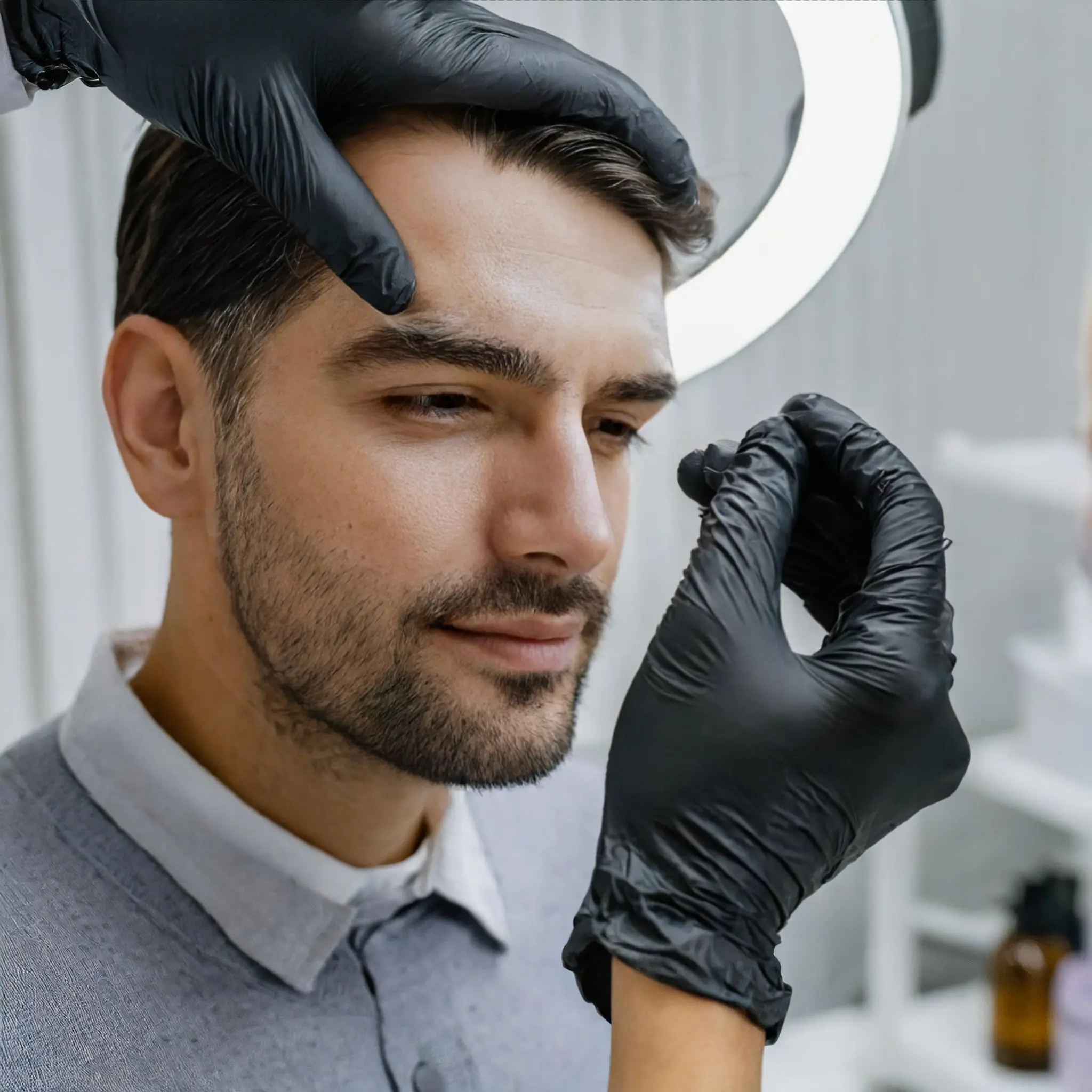
The FUE hairline transplantation procedure involves a step-by-step process designed to ensure a seamless and effective experience. It all begins with an initial consultation, where you meet with our experienced Dermatologist and hair transplant specalist, Dr. Kristy Bailey, to discuss your specific goals and expectations.
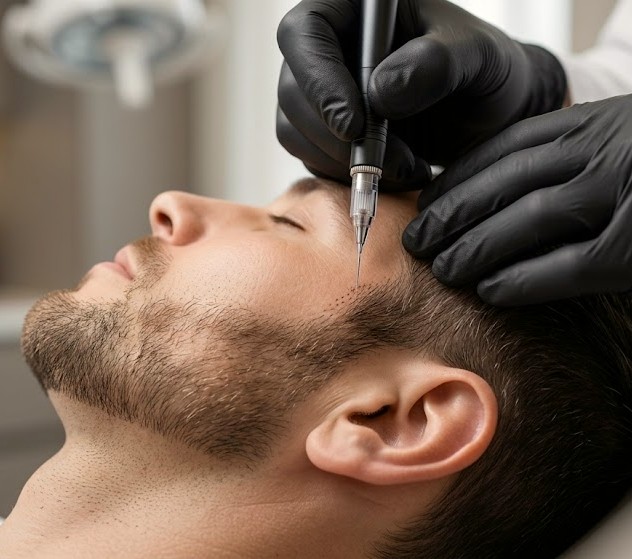
The donor area and area of concern are carefully and artistically mapped out. During the procedure, local anesthesia is administered by Dr. Bailey to ensure your comfort. The next steps involve the extraction of individual follicular units from the donor site, typically located on the back or sides of your head. These healthy follicles are then meticulously implanted into the areas experiencing hair loss. The result is a natural-looking and lasting solution to hair restoration, tailored to your unique needs and preferences.
Hairline Hair Transplant
The FUE hairline transplantation procedure involves a step-by-step process designed to ensure a seamless and effective experience. It all begins with an initial consultation, where you meet with our experienced Dermatologist and hair transplant specalist, Dr. Kristy Bailey, to discuss your specific goals and expectations.
The donor area and area of concern are carefully and artistically mapped out. During the procedure, local anesthesia is administered by Dr. Bailey to ensure your comfort. The next steps involve the extraction of individual follicular units from the donor site, typically located on the back or sides of your head. These healthy follicles are then meticulously implanted into the areas experiencing hair loss. The result is a natural-looking and lasting solution to hair restoration, tailored to your unique needs and preferences.
Your journey begins with a one-on-one consultation with Dr. Bailey at our downtown Toronto clinic. Dr. Bailey evaluates your current hairline, assesses donor density and quality under magnification, reviews your hair loss history and likely progression, and discusses your aesthetic goals in detail. Photographs are taken to document your baseline and to assist with hairline design planning.
Together, you and Dr. Bailey will determine the target hairline position, the number of grafts required, and whether complementary treatments such as PRP would support your outcome. You will leave with a written pre-operative checklist covering medications to pause, alcohol and smoking restrictions, and scalp care instructions to begin in the weeks before surgery.
On procedure day, Dr. Bailey draws your new hairline onto your scalp before any extraction begins. The design is refined collaboratively with you, with careful adjustments made for your forehead shape, facial proportions, and the natural temporal peaks and irregularities that prevent the hairline from appearing artificial. Single-follicle units are designated for the frontal edge to ensure a soft, graduated transition into the restored density behind it.
Both the donor area and the recipient zone are prepared, and a local anesthetic is administered to ensure the procedure is comfortable throughout. Dr. Bailey uses a precision micro-punch to extract follicular units from the donor area one at a time. Each graft is assessed and stored in a preservation solution. Recipient sites are created at angles and depths that replicate the natural forward and downward direction of frontal hairline growth. Each follicular unit is placed by hand by Dr. Bailey. Depending on graft count, the procedure typically takes five to eight hours, with scheduled breaks throughout.
You will leave the clinic the same day with written aftercare instructions and a prescribed care kit. Mild swelling across the forehead and pinpoint redness at the graft sites are normal during the first week and resolve progressively. The transplanted hairs shed between weeks two and four, which is an expected part of the follicle cycle and does not indicate graft failure.
New hair growth begins emerging from approximately month three, with density building progressively through months six to twelve. The full result is assessed at twelve months. Follow-up appointments are scheduled at one week, three months, six months, and twelve months to monitor your progress.
Technology, Results, and Recovery
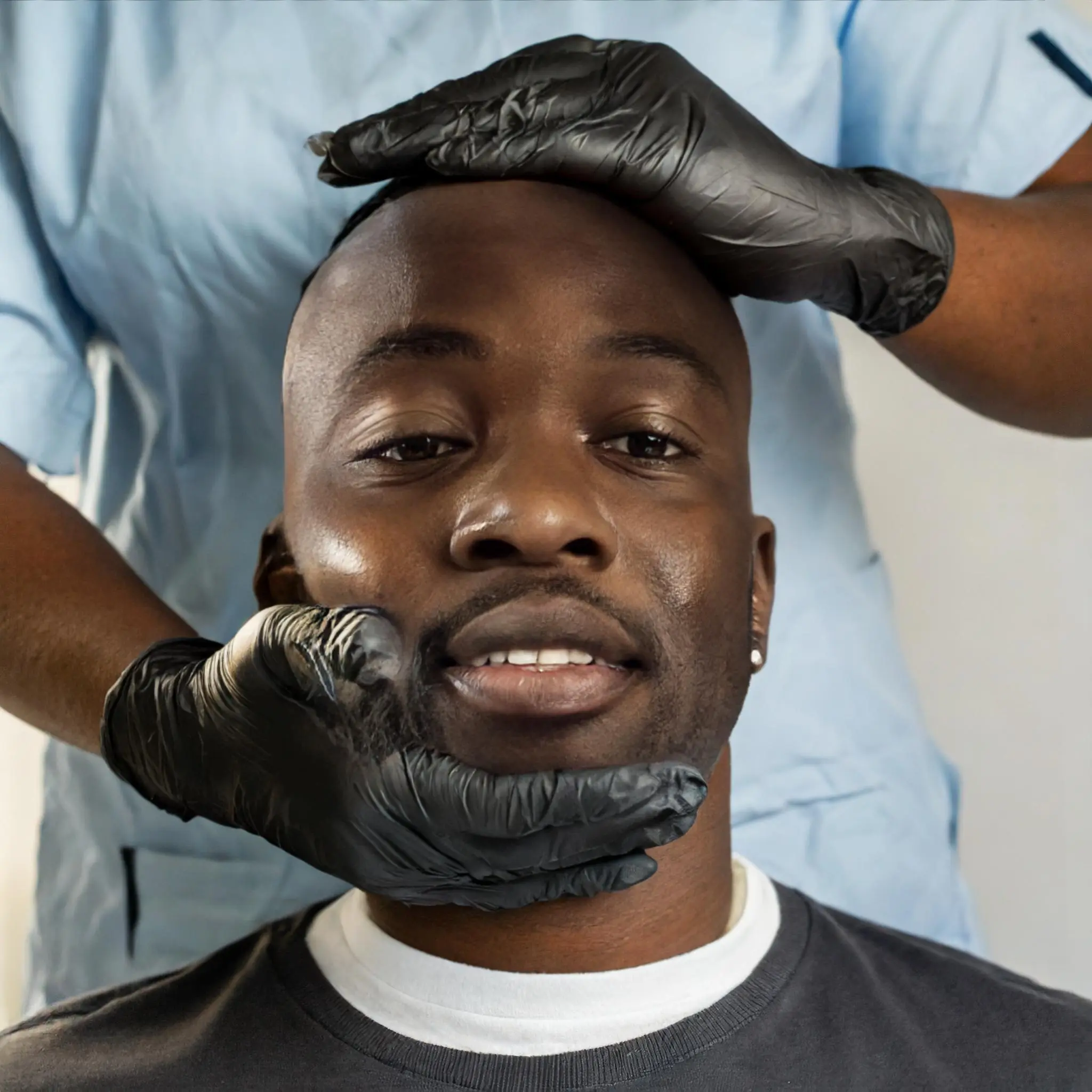
Hair Transplant Centre Toronto uses the latest generation of micro-punch instrumentation and graft preservation media. Hairline transplantation requires particularly fine tooling and precise extraction technique because the frontal zone demands single- and two-follicle grafts that must be handled carefully to preserve their viability. Dr. Bailey completed her FUE training alongside internationally recognized hair restoration specialists and continues to attend advanced surgical education programmes annually, with ongoing focus on the technical requirements of hairline design and frontal zone restoration.
New hair growth from transplanted follicles is permanent. The relocated follicles originate from DHT-resistant donor zones and retain that resistance in their new positions along the hairline, meaning they continue to grow for life. Hair calibre and density normalize fully by months ten to twelve. For patients with ongoing native hair loss behind the transplanted hairline, Dr. Bailey may recommend complementary non-surgical treatments to slow surrounding thinning and preserve the overall visual result.
Most patients return to normal daily activities within two to three days following a hairline transplant. Mild swelling across the forehead typically peaks at day two to three and resolves by day five to seven. Pinpoint scabbing at the graft sites lifts and clears within the first ten days. Transplanted hairs shed between weeks two and four, which is normal. New growth begins around month three and develops progressively through month twelve. Strenuous activity and direct sun exposure to the scalp should be avoided for 2 weeks following the procedure.

Hair Transplant Centre Toronto uses the latest generation of micro-punch instrumentation and graft preservation media. Hairline transplantation requires particularly fine tooling and precise extraction technique because the frontal zone demands single- and two-follicle grafts that must be handled carefully to preserve their viability. Dr. Bailey completed her FUE training alongside internationally recognized hair restoration specialists and continues to attend advanced surgical education programmes annually, with ongoing focus on the technical requirements of hairline design and frontal zone restoration.

New hair growth from transplanted follicles is permanent. The relocated follicles originate from DHT-resistant donor zones and retain that resistance in their new positions along the hairline, meaning they continue to grow for life. Hair calibre and density normalize fully by months ten to twelve. For patients with ongoing native hair loss behind the transplanted hairline, Dr. Bailey may recommend complementary non-surgical treatments to slow surrounding thinning and preserve the overall visual result.

Most patients return to normal daily activities within two to three days following a hairline transplant. Mild swelling across the forehead typically peaks at day two to three and resolves by day five to seven. Pinpoint scabbing at the graft sites lifts and clears within the first ten days. Transplanted hairs shed between weeks two and four, which is normal. New growth begins around month three and develops progressively through month twelve. Strenuous activity and direct sun exposure to the scalp should be avoided for 2 weeks following the procedure.
Hairline Transplant Specialist: Dr. Kristy Bailey
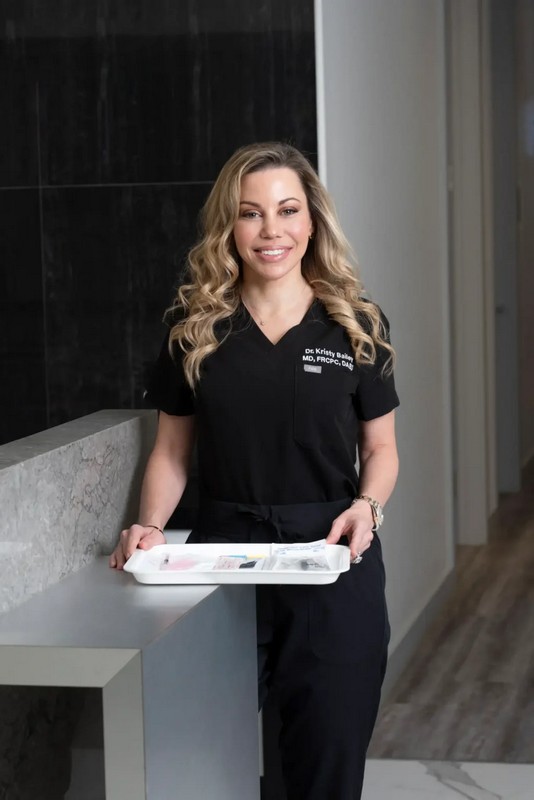
Dr. Kristy Bailey is a double-board-certified dermatologist whose clinical practice focuses on hair, scalp, and nail disorders. Her dermatological expertise informs every stage of hairline transplant planning, from assessing the cause and likely progression of frontal recession to selecting the most appropriate graft sizes for the frontal edge and designing a hairline position that will remain natural-looking as the patient ages.
Rated number one of 233 dermatologists in Toronto on RateMDs, Dr. Bailey performs every hairline transplant personally at our King Street West Toronto clinic, from the initial consultation and hairline design through to final graft placement. Patients choose Hair Transplant Centre Toronto for hairline restoration because Dr. Bailey performs the entire procedure herself, and because her approach to hairline design is conservative, precise, and grounded in a thorough understanding of how facial aesthetics and hair loss patterns interact over time.
Commonly Asked Questions
A FUE hairline transplant is a surgical procedure in which individual hair follicles are extracted from the permanent donor zone at the back and sides of the scalp and transplanted along the frontal hairline to restore definition, density, and a natural hairline position.
Because the follicles are sourced from DHT-resistant zones, they continue to grow permanently in their new position.
Candidacy depends on the extent and stability of your hairline recession, the density of your scalp donor hair, and your general health. A consultation with Dr. Bailey at our Toronto clinic will determine whether surgery is appropriate and what hairline position and density are achievable for your specific situation.
Dr. Bailey designs the new hairline collaboratively with you on the day of the procedure, before any extraction begins. The design accounts for your forehead shape, facial proportions, the natural position of your temporal peaks, and the irregular, slightly asymmetrical quality that makes hairlines look natural rather than drawn. A conservative position is recommended to ensure the result remains appropriate as you age.
Graft count depends on the extent of recession and the target density. Mild hairline softening may require 800 to 1,500 grafts; more advanced recession involving the temples and frontal zone can require 1,500 to 2,500 or more. Dr. Bailey provides a specific estimate during your consultation based on scalp measurements and donor assessment.
Depending on graft count, the procedure typically takes five to eight hours. Breaks are scheduled throughout to ensure your comfort. The procedure is performed under local anesthetic and is comfortable throughout.
Yes. Single-follicle units are placed along the frontal edge to create a soft, graduated transition. The grafts are angled and directed to replicate the natural forward and downward growth of the frontal hairline. Because the transplanted hair is your own, it grows, cuts, and styles exactly as your natural hair does.
Transplanted hairs shed between weeks two and four, which is normal. New growth begins around month three; approximately half the result is visible by month six, and the full outcome is assessed at twelve months.
Yes. The transplanted follicles are sourced from DHT-resistant donor zones and continue growing at the hairline for life. However, native hair behind the transplanted zone may continue to thin over time, and Dr. Bailey discusses a longer-term management plan for this during your consultation.
Local anesthetic is administered before any extraction or incision begins. The procedure itself is comfortable for the vast majority of patients. Mild postoperative soreness for 1 to 2 days is typical and manageable with over-the-counter pain medication.
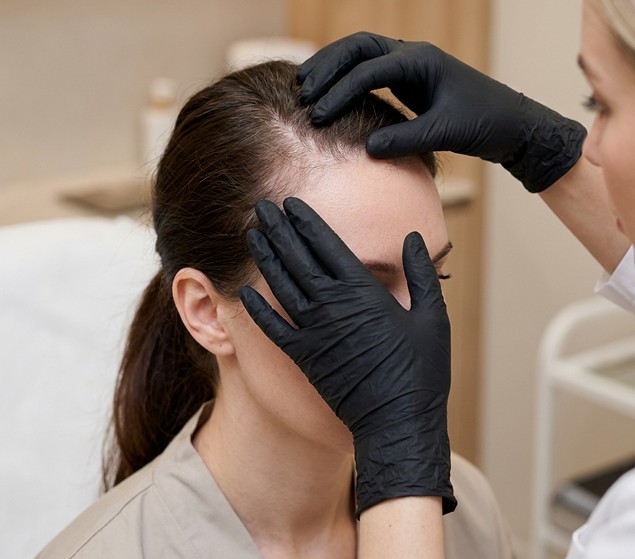
Yes. Women experiencing hairline recession due to traction alopecia, hormonal changes, or frontal fibrosing alopecia may be suitable candidates. The planning approach differs from male hairline restoration and is assessed on an individual basis during the consultation with Dr. Bailey.
Yes. PRP therapy is frequently recommended alongside a hairline transplant to support graft survival and stimulate surrounding follicles. Non-surgical treatments such as the Theradome laser helmet or Viviscal supplements may also be recommended to manage ongoing native hair loss behind the transplanted zone.